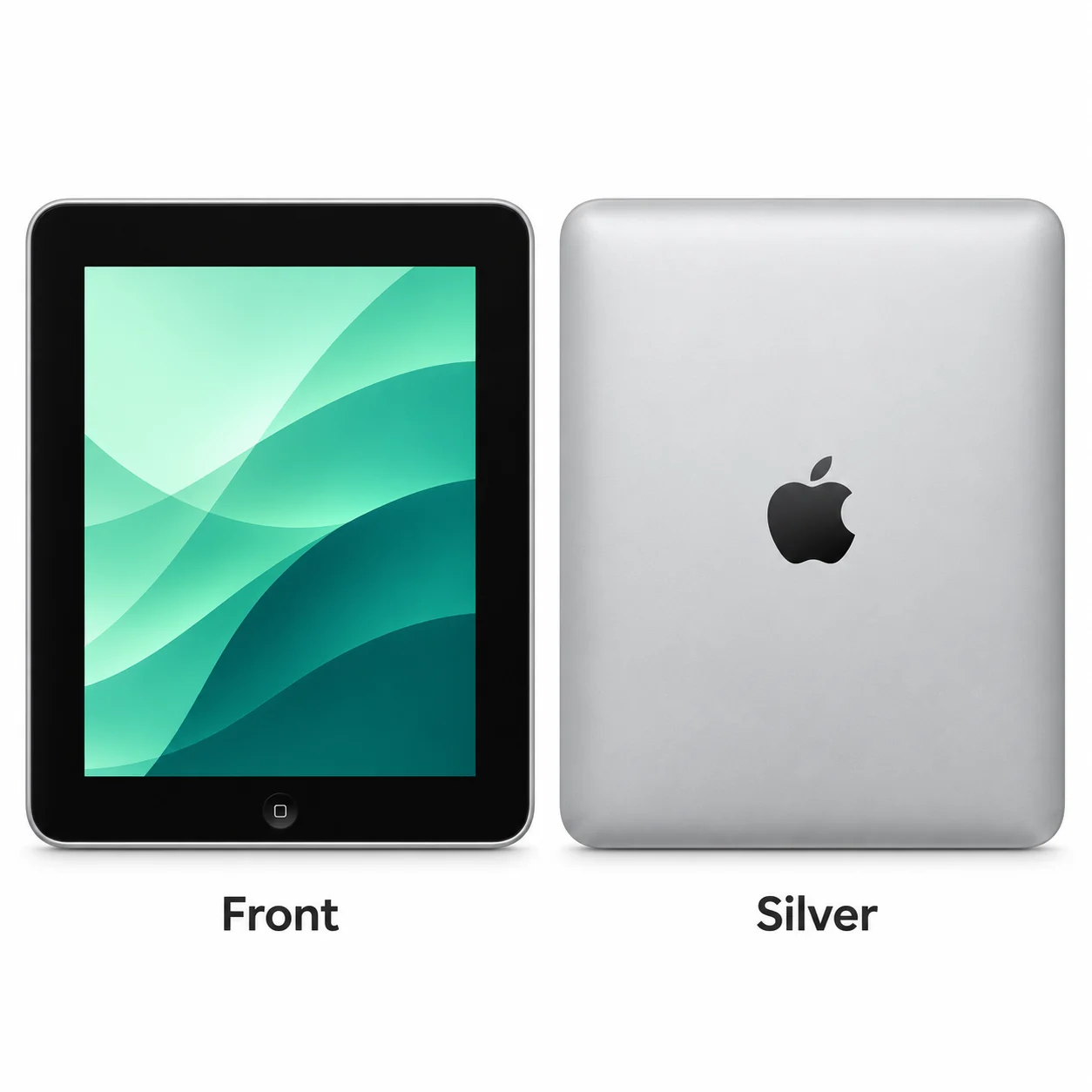
iPad (1st generation) model numbers
A model number identifies the model or hardware version and is shared by many devices. Your serial number identifies your individual device; cellular versions also have an IMEI.
Where to find your model number
- Open Settings, then General, then About.
- At Model Number, tap the displayed part number to reveal the A-number.
- Match the A-number to the Wi-Fi or cellular variant below; Model Name alone does not identify every regional radio version.
If the iPad will not turn on: Check the small model number printed on the back of the iPad. Use good lighting; do not open the device.
All 2 A-numbers listed for iPad (1st generation) in Apple’s identification guide and verified regional technical specifications, checked 20 November 2026. Wi-Fi and cellular variants share this model page; China, radio and other regional distinctions are retained where Apple states them.
Swipe the table sideways on a narrow screen.
| Model number | Version or region | Useful detail |
|---|---|---|
| A1219 | Wi-Fi | A1219 on the iPad (Wi-Fi) |
| A1337 | Wi-Fi + 3G | A1337 on the iPad (Wi-Fi + 3G); Apple does not assign a complete country-by-country mapping in the identification entry. |
Original finish
These are the original manufacturer finishes listed for this model, including documented later colours. Availability varied over time and by market.
- Silver
Silver aluminium rear with black front bezel; no cameras. Colour swatch is approximate; lighting and screen settings affect appearance.
Use the colour and the model number together. Lighting, screen settings, cases and replacement backs can change how a device looks.
Getting to know the iPad (1st generation)
The original iPad from 2010
The first iPad combines an A4 chip with a 9.7-inch 1024 × 768 display. Its silver aluminium back, black front bezel and 13.4 mm body identify the earliest design. A1219 is the Wi-Fi version and A1337 adds 3G hardware.
No cameras or fingerprint reader
The original iPad has neither a front camera nor a rear camera. Its Home button has no Touch ID. These are useful distinguishing features when identifying an early iPad from a photograph or checking a device that will not start.
Original connectors and storage
The tablet uses a 30-pin connector and was offered with 16GB, 32GB or 64GB of storage. It is not compatible with Apple Pencil. The Wi-Fi + 3G version uses a micro-SIM card.
Specifications and what they mean
Read each specification alongside its explanation. Manufacturer test figures describe controlled conditions; age, usage and battery condition affect everyday performance.
Swipe the table sideways on a narrow screen.
| Feature | iPad (1st generation) | What it means |
|---|---|---|
| Screen | 9.7-inch LCD | The diagonal size describes the screen, not the outside width of the tablet. |
| Resolution | 1024 × 768 pixels; 132 ppi | Pixel count describes image detail; ppi describes how tightly pixels are packed. |
| Processor | A4 | The chip runs applications and graphics; individual software decides which capabilities it uses. |
| Storage | 16GB, 32GB and 64GB | Apple-listed capacity options across this model’s life; usable space is lower after software and formatting. |
| Body size | 242.8 × 189.7 × 13.4 mm | Height × width × depth before adding a case. |
| Weight | 680 g Wi-Fi; 730 g cellular | The radio hardware can change weight; these are Apple’s listed device weights. |
| Rear camera | No rear camera | This original iPad has no built-in camera. |
| Front camera | No front camera | There is no built-in front camera on this model. |
| Charging and wired connection | 30-pin | Use a compatible cable and power adapter. Data speed depends on the cable, accessory and connection mode. |
| Apple Pencil | No compatible Apple Pencil listed | Pencil models are not interchangeable; a compatible software version may be required. |
| Authentication | Passcode; no Face ID or Touch ID | The physical Home button has no fingerprint sensor. |
| Wireless connections | Wi-Fi (802.11a/b/g/n); Bluetooth 2.1 + EDR | Wi-Fi needs a suitable network; Bluetooth connects compatible accessories. |
| Mobile data | 3G on cellular models | Wi-Fi-only hardware has no cellular modem. Coverage, plan, network support and regional bands all matter. |
| Apple battery test | Up to 10 hours of web browsing on Wi-Fi or video | A manufacturer test claim for a new battery; real runtime depends on usage, settings, age and condition. |
| Current major software compatibility | Not listed for iPadOS 27 | Checked on 20 November 2026; feature availability is separate from basic operating-system compatibility. |
Software and security updates
iPad (1st generation) is not on Apple’s iPadOS 27 compatibility list, checked on 20 November 2026. Check Settings > General > Software Update for the software offered to this model, and check individual app requirements before relying on an older tablet.
Common questions about the iPad (1st generation)
Which Apple Pencil works with iPad (1st generation)?
Apple does not list iPad (1st generation) as compatible with any Apple Pencil model. A basic capacitive stylus is a different kind of accessory and does not add Apple Pencil support.
Which charging connector does iPad (1st generation) use?
iPad (1st generation) has a 30-pin connector. It is the wide Apple connector used before Lightning; use an accessory explicitly made for it.
Does iPad (1st generation) have Face ID or Touch ID?
iPad (1st generation) has a physical Home button, but no Touch ID or Face ID. A passcode provides device authentication.
Can iPad (1st generation) run iPadOS 27?
iPad (1st generation) is not on Apple’s iPadOS 27 compatibility list, checked on 20 November 2026. Check Settings > General > Software Update for the software offered to this model, and check individual app requirements before relying on an older tablet.
Does the original 2010 iPad have a camera?
No. The first-generation iPad has no front or rear camera. Cameras first appear on iPad 2.
About this guide
Manufacturer information checked 20 November 2026. Regional features, software availability and colours can vary. Pictures are visual guides; colours and small details are approximate.